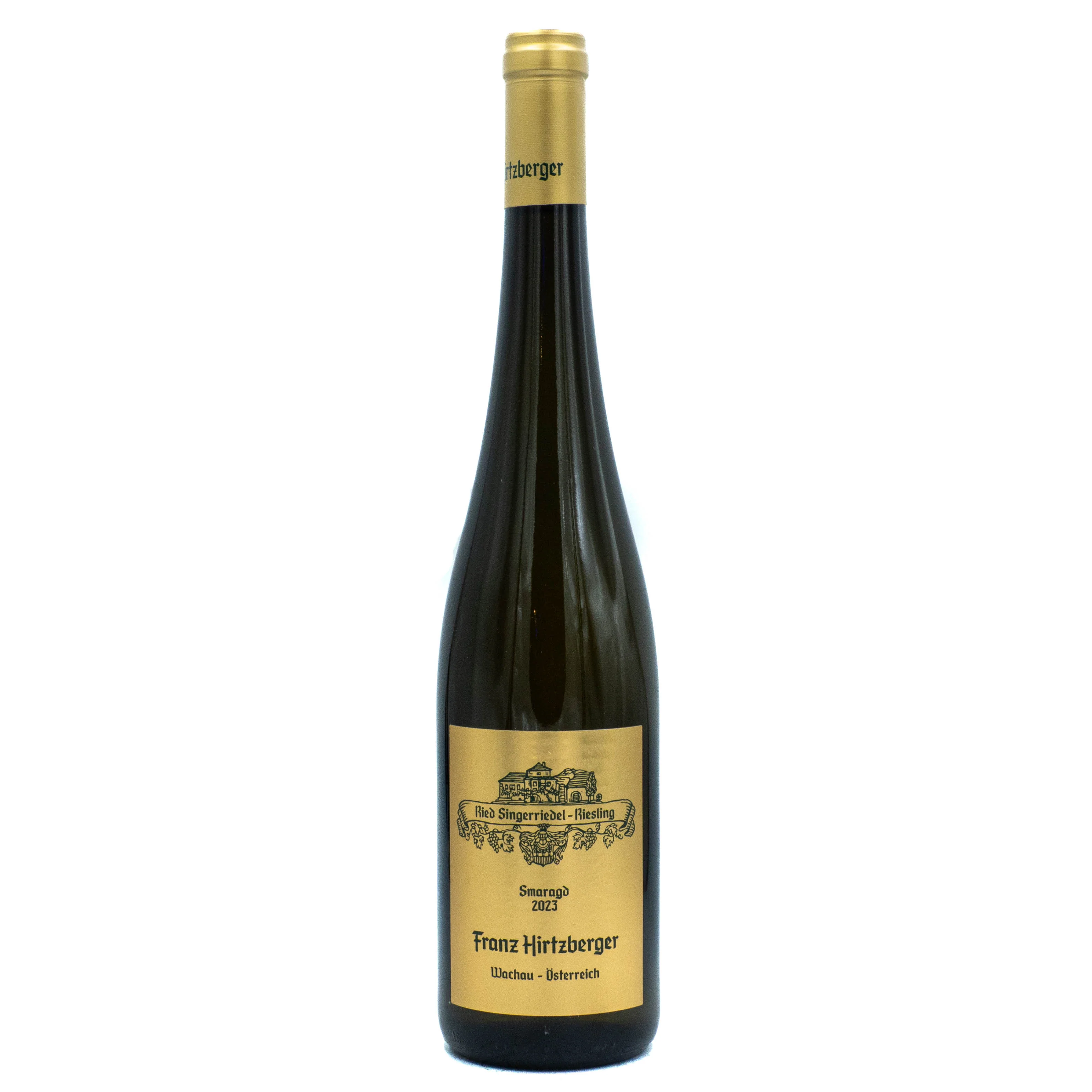
Franz Hirtzberger Grüner Veltliner Federspiel Rotes Tor 2023
The Land
The “Rotes Tor” vineyard lies on steep terraced slopes above Spitz, at the cooler western end of the Wachau. Its soils of gneiss and mica schist, laced with mineral-rich gravel, shape Grüner Veltliner with precision and purity. Southeast-facing terraces soak in long, gentle hours of sunlight, while cool winds from the Spitzer Graben slow ripening and preserve freshness. The Wachau is often described as bracketed by two poles: Loiben in the warmer east and Spitz in the cooler west. If the east is known for richness, Spitz expresses crystalline clarity, and Rotes Tor captures this balance perfectly — a Grüner that reflects both ripeness and mountain-born minerality.
The Wine
The 2023 Rotes Tor Federspiel is Grüner Veltliner in its most vivid, transparent form. Fermented with native yeasts in stainless steel, then matured in large, neutral foudres, it is built to preserve purity rather than adorn it. Aromas of pear, lime zest, white peach, and crushed herbs rise from the glass, underpinned by the grape’s signature white pepper. On the palate, it is precise and linear, with fine tension and a salty, stony edge that lingers on the finish. This is Grüner as the Wachau’s cooler terraces intend: vibrant, detailed, and alive with energy.
The People
Few names carry as much weight in the Wachau as Franz Hirtzberger. Together with F.X. (now Lucas) Pichler, he represents not only the geographic pillars of the valley — Spitz in the west and Loiben in the east — but also its stylistic and qualitative benchmarks. For decades, Franz has elevated Spitz into the very heart of Austrian wine culture, identifying the finest terraces and co-founding the Vinea Wachau. Since 1983, his philosophy has been unwavering: meticulous work in the vineyard, harvesting only when each cluster is perfectly ripe — often requiring four or five passes through a parcel — and minimal intervention in the cellar. Fermentations are natural, aging takes place in large, seasoned foudres, and there is no bâtonnage, ensuring that terroir speaks clearly. Today, Franz the third continues this legacy, overseeing all cellar work with the same rigor. The Hirtzberger name is synonymous with single-vineyard greatness — from Singerriedel and Honivogl to Rotes Tor — wines that are not only benchmarks of the Wachau, but among the finest dry whites in Europe.
Original: $49.00
-70%$49.00
$14.70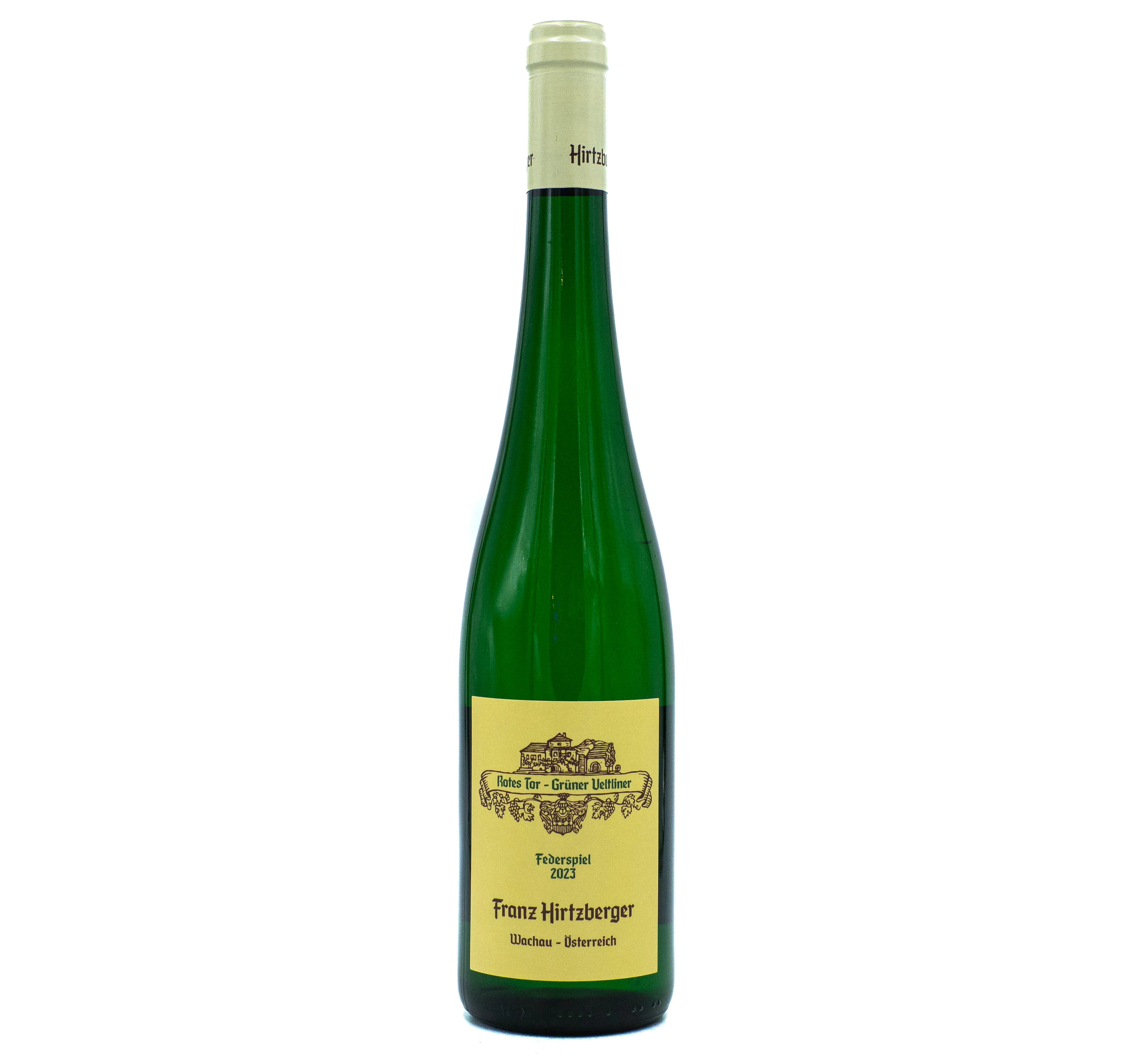
Description
The Land
The “Rotes Tor” vineyard lies on steep terraced slopes above Spitz, at the cooler western end of the Wachau. Its soils of gneiss and mica schist, laced with mineral-rich gravel, shape Grüner Veltliner with precision and purity. Southeast-facing terraces soak in long, gentle hours of sunlight, while cool winds from the Spitzer Graben slow ripening and preserve freshness. The Wachau is often described as bracketed by two poles: Loiben in the warmer east and Spitz in the cooler west. If the east is known for richness, Spitz expresses crystalline clarity, and Rotes Tor captures this balance perfectly — a Grüner that reflects both ripeness and mountain-born minerality.
The Wine
The 2023 Rotes Tor Federspiel is Grüner Veltliner in its most vivid, transparent form. Fermented with native yeasts in stainless steel, then matured in large, neutral foudres, it is built to preserve purity rather than adorn it. Aromas of pear, lime zest, white peach, and crushed herbs rise from the glass, underpinned by the grape’s signature white pepper. On the palate, it is precise and linear, with fine tension and a salty, stony edge that lingers on the finish. This is Grüner as the Wachau’s cooler terraces intend: vibrant, detailed, and alive with energy.
The People
Few names carry as much weight in the Wachau as Franz Hirtzberger. Together with F.X. (now Lucas) Pichler, he represents not only the geographic pillars of the valley — Spitz in the west and Loiben in the east — but also its stylistic and qualitative benchmarks. For decades, Franz has elevated Spitz into the very heart of Austrian wine culture, identifying the finest terraces and co-founding the Vinea Wachau. Since 1983, his philosophy has been unwavering: meticulous work in the vineyard, harvesting only when each cluster is perfectly ripe — often requiring four or five passes through a parcel — and minimal intervention in the cellar. Fermentations are natural, aging takes place in large, seasoned foudres, and there is no bâtonnage, ensuring that terroir speaks clearly. Today, Franz the third continues this legacy, overseeing all cellar work with the same rigor. The Hirtzberger name is synonymous with single-vineyard greatness — from Singerriedel and Honivogl to Rotes Tor — wines that are not only benchmarks of the Wachau, but among the finest dry whites in Europe.